

Nature has a way of pulling artists back to the canvas, no matter the century. From jagged, snow-covered peaks to a quiet bend in a river, famous landscape artists have spent lifetimes trying to get the outdoors right with paint. It's never really been about pretty scenery alone. There's mood in these paintings, memory too, and a kind of respect for the natural world that's hard to fake. This piece walks through the painters, movements, and paintings that built landscape art history, plus where the genre is headed next.
Ask any art historian, and they'll tell you famous landscape artists tend to obsess over the same things: light, atmosphere, the way a scene changes minute to minute. They noticed how sunlight breaks across water, how fog can soften an entire mountain range, and how a forest quietly shifts mood with the seasons. Most of them started out simply watching, long before they became skilled at composition. Their paintings were never lazy copies of a view. Each one was built, piece by piece, to make a viewer feel something the moment they stopped to look.
The genre really took off during the Romantic movement of the 1800s, when artists got tired of following rigid academic rulebooks. They wanted room to feel things and paint accordingly, instead of sticking to formal studio conventions handed down for generations. That shift put nature front and center, rather than treating it as filler behind a portrait. What followed was a wave of landscape painters whose habits and ideas still turn up in art classrooms today.
Famous landscape paintings work because they don't rely on technical skill alone. There's storytelling in them too. A strong landscape doesn't just record a place accurately; it makes you feel like you're standing there, maybe even feeling the air move. That comes down to smart color choices, believable light, and a composition that quietly leads your eye across the canvas without you noticing it's happening.
| Element | Historical Approach | Modern Approach |
| Color Use | Muted, earthy tones | Bold, saturated palettes |
| Brushwork | Detailed and controlled | Loose, expressive strokes |
| Subject Focus | Mountains, rivers, forests | Urban nature, climate themes |
| Tools | Oil paints, canvas | Digital and mixed media |
The table above sums up how the style has shifted over time, even though the emotional goal hasn't really changed much at all.

Historical landscape painters laid down the groundwork that modern landscape painters still lean on, whether they realize it or not. Their patience with observing real environments, paired with a solid instinct for composition, produced paintings that still hold up more than a hundred years later. A few names come up again and again when people talk about landscape history.
Bierstadt is best known for his massive, theatrical paintings of the American West, particularly the Rocky Mountains. He leaned hard into dramatic lighting to create a sense of scale and awe that felt almost cinematic for his time. Collectors paid steep prices for his canvases while he was alive, and his flair for grand, adventurous scenes is still easy to spot in landscape art made today.
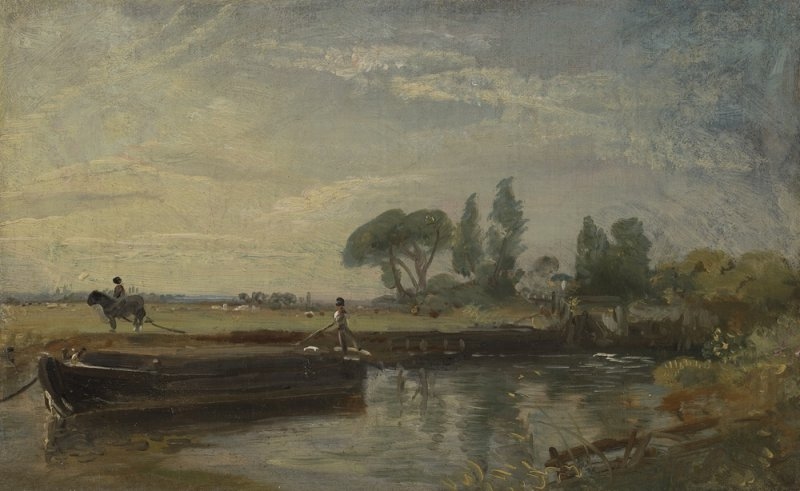
Constable painted the English countryside without much fuss or exaggeration. Clouds, fields, quiet rivers- that was his territory, and he handled it with a kind of honesty that felt personal rather than staged. His skies in particular became famous for looking genuinely alive. Plenty of landscape painters after him picked up that same gentle, observational habit.
People called Shishkin the "forest painter," and it fit. He rendered Russian woodlands with almost obsessive detail, treating single trees like they deserved their own portrait. Bark texture, filtered light, the whole thing was handled with a near-scientific level of care. That discipline is exactly why historical landscape painters still point to his work as a benchmark.
Between the three of them, it's clear nature could carry a painting entirely on its own, no need for a human subject front and center.
Modern landscape painters aren't ignoring the past; they're building right on top of it while testing new materials and angles. A lot of them combine traditional composition rules with color choices that feel almost experimental by comparison. Many also weave in personal or cultural themes through their outdoor scenes, giving the work more to say than surface-level beauty alone.
These days, plenty of modern landscape painters sketch compositions digitally before a single brushstroke touches real canvas. It speeds things up considerably without watering down the hands-on skill or personal style that makes a painting theirs. Some also turn to watercolor for its soft, unpredictable light and delicate transitions. If you're curious how timing and transparency shape that kind of painting, this piece on famous watercolor artists gets into the discipline that medium actually demands.
Contemporary landscape artists tend to blur the line between realism and abstraction, and honestly, that's part of the appeal. They'll happily distort scale, push color further than expected, or shift perspective just to chase a feeling rather than a photo-accurate view. That willingness to bend the rules keeps the whole genre from feeling stuck in the past.
Some contemporary landscape artists pull directly from abstract art, simplifying shapes while keeping enough of nature intact to stay recognizable. The result sits somewhere between grounded and dreamlike, which is exactly the point. For more on how abstraction changed visual art in general, this guide on famous abstract artists covers that shift in more depth.
A lot of contemporary landscape artists use their work to talk about climate concerns, whether that's intentional activism or just a reflection of what they're seeing around them. Melting glaciers, wildfires, shrinking forests- these show up constantly in gallery shows now. It turns landscape painting into something closer to commentary than decoration.
Some famous landscape paintings are recognizable even to people who've never set foot in a gallery. These are usually the ones that marked a real turning point, whether that's a new technique or a completely different way of looking at the outdoors.
| Painting | Artist | Why It Matters |
| The Oxbow | Thomas Cole | Defined American landscape painting style |
| Wanderer Above the Sea of Fog | Caspar David Friedrich | Symbol of Romantic solitude |
| Impression, Sunrise | Claude Monet | Sparked the Impressionist movement |
| A Storm in the Rocky Mountains | Albert Bierstadt | Showcased dramatic Western scenery |
These four alone are worth studying closely if you want a real sense of how landscape art history, lighting, and composition actually evolved.
Once you start noticing brushwork, color choices, and where the light's coming from, a landscape painting stops being just a pretty picture. Seeing the work in person helps too, since photos flatten out texture and scale in ways that are easy to miss otherwise. It's a slow habit to build, but it pays off fast once it clicks.
Do this a few times, and you'll start spotting details you'd have walked right past before.
Famous landscape artists have shaped how people see nature for a couple of centuries now, turning mountains, rivers, and skies into something worth pausing over. From historical landscape painters like Bierstadt and Constable to today's contemporary landscape artists, the genre keeps moving forward without losing its respect for the outdoors. Whether a painting is a hundred years old or finished last month, famous landscape paintings still offer a real window into how artists turn raw scenery into something that sticks with you.
Honestly, Albert Bierstadt's name comes up more than almost anyone else's. He built his reputation on huge, dramatic scenes of the American West — mountains, light, that whole sense of scale — and somehow they still hit emotionally, even after all this time.
It really comes down to freedom. Today's painters mix realism with abstraction and aren't shy about using digital tools next to a regular brush. Older painters mostly played it safe, sticking to detailed, romantic versions of nature exactly as it looked.
Part of it's the skill, part of it's history — you can't really separate the two. That mix is why collectors and museums keep chasing these pieces, and why anyone studying art seriously ends up circling back to them eventually.
There's usually something personal behind it. Climate change, a memory, sometimes just an abstract feeling about a place — contemporary artists tend to use landscape as a way to say something, not just paint a pretty view for its own sake.
For sure. Just sitting with these paintings and picking apart the composition, the color choices, how the brush moves — that alone teaches a lot. Do it enough, and your own style starts showing up almost without trying.
This content was created by AI