

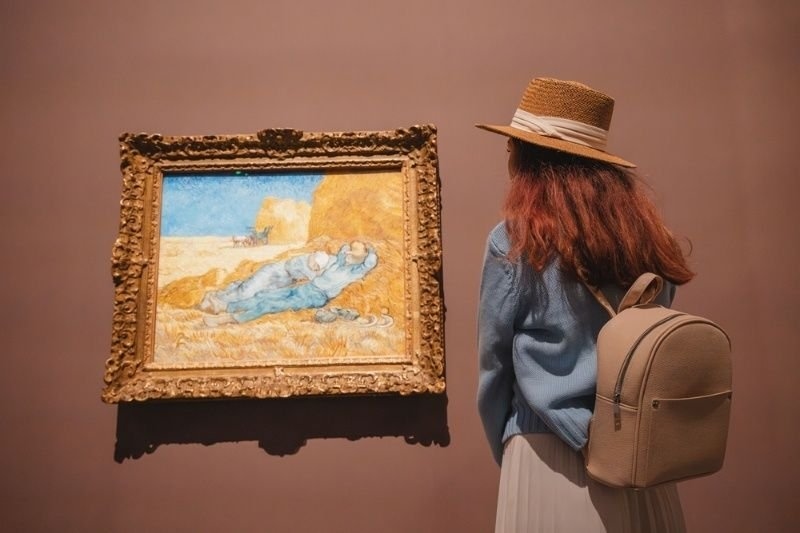
There are art movements, and there are art movements that have a lasting impact and that you will still be able to see the influence of for generations to come. One of them is impressionism. Artists didn't try to get the perfect details but changed the light, used loose strokes, everyday scenes, and real emotion.
This blog will show you the iconic Impressionist artists, explain the difference between their artwork, familiarize you with amazing paintings, and help you find out why their paintings remain relevant today.
Impressionist artists did more than fill museum walls—they completely changed how people think about painting. Suddenly, color took on new importance. Outdoor scenes, daily moments, and raw emotion stepped into the spotlight. Instead of perfect, polished images, these artists chased the feeling of a moment—brushstrokes alive with light and movement.
Art students still look to those brushstrokes today. Why? Because impressionism shows that sharp observation matters more than chasing perfection. That’s why you can spot its mark everywhere, from gallery walls to digital screens.
Also Read: Vincent van Gogh Famous Paintings: Top 10 Masterpieces
Each big-name Impressionist brought something different. Impressionism isn’t a single style—it’s a mashup of voices and visions, all pushing against the old way of painting.
Mary Cassatt, for example, did something special—she paid close, honest attention to women, children, and family ties. Instead of big drama, her paintings caught small, real moments. She watched people quietly, and that’s what made her work feel so personal.
On top of that, Cassatt helped introduce French Impressionism to American collectors—a huge deal that doesn't get talked about enough. Her influence still runs strong, especially for portrait artists.
Childe Hassam took Impressionism out of Europe and gave it new life in America. He didn’t paint old Paris streets. His world was fast-moving city crowds, sunlit coastal towns, and flags fluttering—all full of motion and atmosphere.
While other Impressionists clung to country scenes, Hassam made city life sing, carving out a distinctly American take on Impressionism.
John Henry Twachtman’s paintings don’t shout—they whisper. Soft colors, quiet streams, snowy gardens, dreamy light—you have to slow down and really look.
He might not be the loudest voice in the movement, but his peaceful scenes have real emotional weight and still feel fresh today.
Beyond the first wave, painters like these kept shaping Impressionism by making it their own.
Some artists—like William Merritt Chase—stayed true to their classical training but weren’t afraid to experiment. His portraits show real technical strength.
His outdoor scenes open up with brighter colors and looser brushwork. Students loved him; his impact on younger painters was huge.
Then there’s Julian Alden Weir. Funny enough, he started out skeptical of Impressionism, but he changed his mind and let its ideas in. His rural landscapes softened and brightened.
He didn’t lose his grip on careful composition, just found new ways to express himself. Sometimes progress means changing your mind.
Frank W. Benson built his career around sunlight. Whether he painted his family outdoors or wide-open coastlines, he made light the star of the show—not just something in the background but the main attraction.
Suggested Reading: 10 Famous American Artists Who Changed Art History
The legacy of Impressionism isn’t only about the artists. Sometimes it’s a single painting that flips the script.
Take Gustave Caillebotte’s Paris Street, Rainy Day (1877). It stands out for its almost photographic perspective, its quiet, everyday mood. No heroes here—just people crossing wet city streets, painted with care.
It’s realistic, but the way the light shifts across umbrellas and pavement grounds it in Impressionism. You can see how it helped bridge realism and the new way of seeing the world.
Impressionism’s spirit lives on—not just in the names of its painters, but in the way artists everywhere watch the world, chase the light, and find beauty in the ordinary.
Georges Seurat's A Sunday Afternoon on the Island of La Grande Jatte (1884) took Impressionism in a new direction. Although linked more closely with Post-Impressionism, the painting grew directly from Impressionist ideas about light and color.
Tiny dots of paint replaced broad brushstrokes, creating a completely different visual effect. It remains one of the famous impressionist paintings because it shows that artistic experimentation never really stopped.
Claude Monet's Woman with a Parasol—Madame Monet and Her Son (1875) is one of the most famous Impressionist paintings ever created. Wind, sunlight, shadows, plus motion all seem to exist at the same time.
Instead of a carefully posed portrait, Monet painted a passing moment. That natural feeling explains why this work still defines Impressionism for many visitors entering a museum for the first time.
Don't Miss: How Will Digital Artists Shape the Future of Modern Design?
The tale of famous impressionist painters is truly a tale of evolving expectations. They defied convention; believed in the power of observation rather than perfection; and, most importantly, found a canvas in everyday life. That was a turnaround that changed the course of art history.
So, whether it is studying the most famous Impressionist artists, finding out about influential famous Impressionist painters, or simply taking in the timeless, famous Impressionist paintings, it all becomes obvious. Their work is still 'fresh' as it captures moments rather than monuments.
Many photographers work in a manner that is very similar to the way in which the Impressionists worked, using natural light, candid compositions, and everyday subjects.
There are several world-renowned museums with excellent collections of Impressionist works, such as the Parisian museums and the Chicago, New York, and Washington D.C. museums.
Early critics thought the loose brushwork was unfinished and didn't have enough detail for an academic painting. Those same qualities would, over time, become the defining strengths of the movement and would utterly transform public opinion.
Spot any visible brushstrokes, natural light, outdoors, or soft color transitions, plus any everyday subjects. Though each artist used these elements in their own unique way, they are found in many of the celebrated Impressionist works of art.
This content was created by AI