

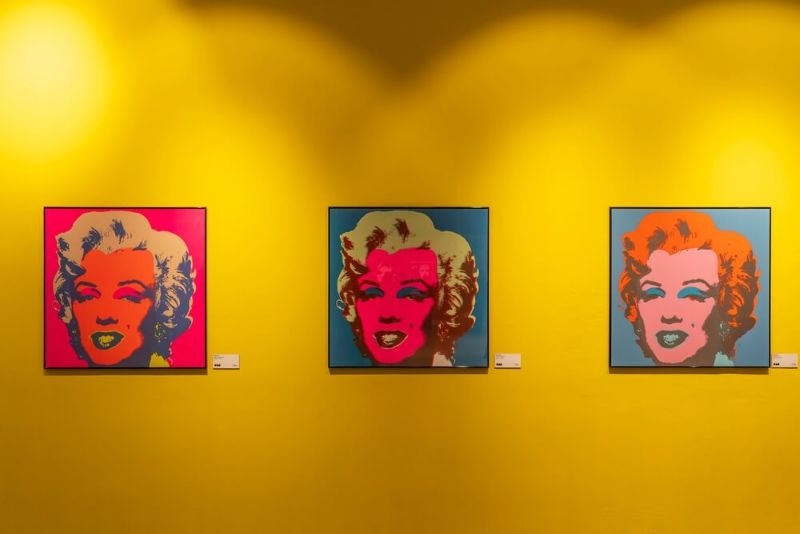
American art is not one neat story. It is a little messy, which is probably why it is interesting. It moves from quiet portraits to wild paint marks, from desert flowers to soup cans, from magazine covers to street language, from lonely diners to huge blocks of color that almost swallow the viewer whole.
That is why famous American artists are still talked about in classrooms, galleries, auctions, documentaries, and even casual conversations. They did not just make art that looked good on a wall. They changed what people were allowed to call art in the first place.
These artists changed art in different ways. That is what makes the list interesting. O’Keeffe changed how people looked at nature. Warhol changed how people looked at consumer culture. Pollock changed the act of painting. Basquiat brought street language, history, and Black experience into sharp focus.
From Georgia O’Keeffe artwork to Andy Warhol pop art, the range is wide. That range is exactly what makes American art hard to reduce to one style.
Some of them were loved quickly. Some were mocked first. Some had to fight harder to be taken seriously. But each one left a mark that still shows up in American culture today.
Georgia O’Keeffe had a way of making simple things feel enormous. A flower was not just a flower in her paintings. A bone was not just a bone. A desert hill was not just a piece of land. She made ordinary natural forms feel strong, close, and almost private.
The power of Georgia O’Keeffe artwork is that it does not shout. It pulls people in slowly. Her flowers, skulls, clouds, and New Mexico landscapes have a calm confidence that still feels modern.
She also helped people see the American Southwest differently. Dry land, open sky, pale bones, and rough mountains became part of a visual language that many artists still borrow from.
Andy Warhol understood something very early: America was becoming obsessed with images. Celebrities, products, packaging, money, newspapers, repetition, fame. He took those things and placed them directly in front of people.
Andy Warhol pop art made a soup can feel like a cultural object. It made Marilyn Monroe feel both glamorous and manufactured. It made people ask whether art had to be handmade, emotional, or rare.
Warhol feels current because everyone lives inside image culture now. People scroll, brand themselves, repeat trends, edit faces, chase attention, and turn daily life into something shareable. Warhol saw that coming before the phone camera made it normal.
Jackson Pollock changed painting by making the act of painting part of the artwork. He dripped, poured, moved, circled, and attacked the canvas from above. His paintings can look chaotic at first, but they have rhythm if someone stays with them.
Pollock became one of the central figures in Abstract Expressionism, a major American art movement that helped shift global attention toward New York after World War II.
His work made painting feel physical. Not tidy. Not polite. Physical.
Jean-Michel Basquiat painted like everything was happening at once. Words, skulls, crowns, anatomy, jazz, money, racism, police, fame, old history, street marks, all crashing together.
Basquiat is often grouped with American Pop Culture Artists, but his work was much sharper than simple pop commentary. He used pop culture, yes, but he also questioned power, violence, Black identity, wealth, and who gets remembered.
His paintings still feel alive because they do not sit quietly. They argue back.
Edward Hopper made loneliness visible. A diner at night. A woman in a hotel room. A gas station. A quiet street. His scenes are simple, but they feel loaded with something unsaid.
He painted America without making it feel too pretty. The light is beautiful, but the people often seem distant from each other. Even when several figures are in the same room, they can feel alone.
That mood has influenced films, photography, advertising, and how people imagine American cities after dark.
Mary Cassatt painted domestic life with real seriousness. Mothers, children, women reading, women sitting, women thinking. Subjects that some people once dismissed as soft or small became powerful in her hands.
Cassatt spent much of her career in France, but she remains one of the most important American artists. Her work matters because she gave emotional and artistic weight to private spaces and everyday care.
She also pushed forward at a time when women artists were not exactly welcomed through the front door.
Check Out: Art Inventory System Guide for Artists and Collectors Prime
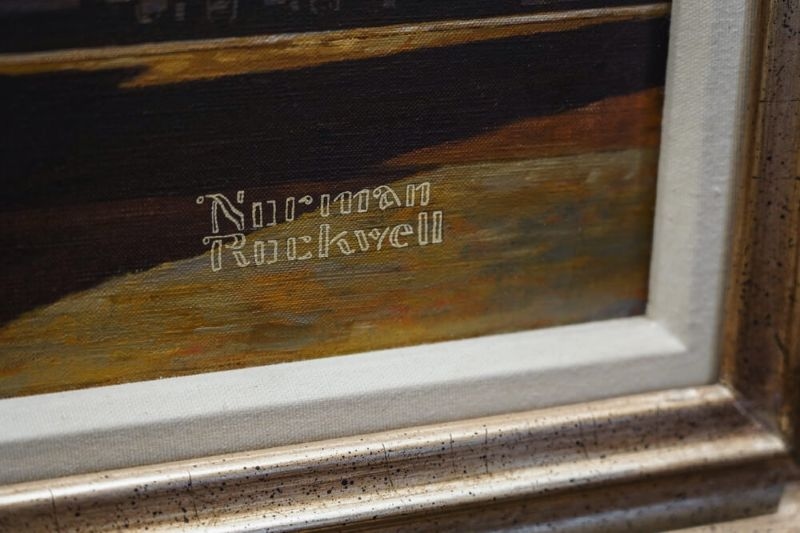
Norman Rockwell reached people who may never have studied art history. His magazine covers were warm, funny, detailed, and very American in the way they captured small habits and familiar scenes.
For years, some critics treated him as too popular, too sentimental, too easy to understand. But that view misses the point. Rockwell knew how to tell a story in one image. That is not easy.
Rockwell also painted serious subjects, especially later in his career. His civil rights paintings showed that his skill could carry more than humor and charm. He could handle moral weight too.
Mark Rothko’s paintings ask the viewer to slow down. At first, they may seem like large rectangles of color. Then, if someone stands in front of them long enough, they start to feel heavy, quiet, emotional, almost like rooms.
Rothko helped shape Abstract Expressionism, another American art movement that changed modern painting. His work proved that art could feel human without showing a human figure at all.
That is a strange gift. Color becomes mood. Space becomes feeling.
Cindy Sherman used photography to ask uncomfortable questions about identity. She dressed as different women, posed in staged scenes, and made viewers wonder who they were really looking at.
Her work is not simple self-portraiture. It is performance, costume, cinema, gender, media, and critique all at once. She showed how images teach people what women are supposed to look like, fear, desire, perform, or become.
That makes her one of the most important American Pop Culture Artists, especially for anyone thinking about movies, fashion, advertising, and social media.
Jacob Lawrence told American history with color, rhythm, and clarity. His Migration Series remains one of the great visual stories of Black American life, showing families moving north in search of work, safety, and possibility.
His paintings are direct, but not plain. The shapes are bold. The colors are strong. The stories are emotional without becoming sentimental.
Lawrence made history feel close. He showed that American art did not need to look away from labor, race, movement, and struggle.
Read More: Forgotten Art Movements Reshaping Museum Exhibits
The most famous American artists did not all agree with each other, and they did not all want the same things from art. Some wanted silence. Some wanted speed. Some wanted beauty. Some wanted confrontation. Some wanted memory. Some wanted to tear old rules apart.
Together, they helped build a larger picture of American life. Not a perfect picture. Not always a comfortable one. But a more honest and interesting one.
Sometimes an artist’s work needs time before people understand it. Markets change, museums revisit old stories, and critics start noticing what earlier audiences missed. In other cases, the artist was ignored because of race, gender, class, or style. After death, archives, exhibitions, and new scholarship can bring the work back into public view.
Edward Hopper is a good starting point for many people because his paintings feel like scenes from a story. A viewer can look at a diner, a window, or a hotel room and immediately feel a mood. From there, Warhol is useful for understanding pop culture, while O’Keeffe helps beginners notice shape, color, and natural forms.
Yes, very much. Warhol’s bright repetition appears in branding and fashion. Basquiat’s crowns, text, and raw marks show up in streetwear and graphic design. O’Keeffe’s colors influence interiors and textiles. Sherman’s staged identities influence photography and fashion editorials. Their work moved far beyond museums, which is one reason they still matter.
This content was created by AI