

For most of art history, the art world simply didn't want women in it. Academies turned them away. Galleries wouldn't hang their work. Historians, when they bothered writing about them at all, often got the details wrong or left them out entirely. And still, women artists painted. Some of them became so good that the doors eventually had to open, even if it took centuries.
Names like Artemisia Gentileschi, Frida Kahlo, and Georgia O'Keeffe are now fixtures of art history courses and museum wings. But it's worth remembering that none of these famous painters had it easy. They didn't just make beautiful paintings. They forced a stubborn institution to make room for them.
Here's a look at ten famous female painters whose work still shapes how people think about painting, identity, and what it takes to keep creating when the system is built against you.
Before the 1900s, formal art training was simply unavailable to most women. Life-drawing classes, where students learned to render the human body, the foundation of most serious historical and religious painting, were considered scandalous for a woman to attend. No figure training meant no access to the large-scale narrative paintings that made careers back then.
Guilds shut female artists out. Wealthy patrons rarely hired them. And on the rare occasions a woman did produce something remarkable, credit sometimes went to a father, brother, or husband instead.
The few who made it usually had something going for them: a painter father willing to teach a daughter at home, a royal court that decided to overlook convention, or just enough stubbornness to outlast the obstacles. This is the backdrop against which every story of women in art from this period has to be understood.
Anguissola is often cited as the first woman to achieve real international recognition as a painter. Born to a noble Italian family, she got an art education that was rare for a woman of her era. She couldn't study the nude figure, so she leaned into portraits and family scenes instead, painting them with a psychological depth that reportedly caught Michelangelo's attention. Later in life, she worked as a court painter in Spain.
Gentileschi might be the best-known female painter of the Baroque period, and for good reason. Her command of light and shadow rivaled anyone working at the time, and she wasn't shy about painting powerful, complicated women. Running her own studio, as she did, was almost unthinkable for a woman in her era.
Vigée Le Brun painted Marie Antoinette and became one of the most sought-after portraitists in Europe. When the French Revolution forced her into exile, she didn't slow down. She rebuilt her career city by city, from Rome to St. Petersburg, and left behind hundreds of portraits along the way.
During the Dutch Golden Age, Ruysch turned flower painting into a highly competitive art form and often outearned her male peers. Her dense, shadowy floral compositions remained in demand well into her eighties, a career length unusual for anyone, let alone a woman, at the time.
Also Read: Modern Art Styles Making Waves Across Galleries in 2026
Morisot wasn't just part of the Impressionist movement. She helped found it. Her loose, light-filled brushwork gave everyday domestic scenes a freshness that became central to how we now think about Impressionism.
An American expatriate in Paris, Cassatt joined the Impressionists at Edgar Degas's personal invitation. Her paintings of mothers and children are tender without tipping into sentimentality, built on real technical skill rather than easy sweetness.
Af Klint was painting large, glowing, spiral, heavy abstract canvases years before abstraction is typically said to have begun, work rooted in her spiritual beliefs. She asked that it stay unseen for decades after her death, convinced the world wasn't ready for it. When it finally surfaced, art historians had to rethink who actually started abstract painting.
Often called the mother of American modernism, O'Keeffe is best known for oversized flowers and stark New Mexico desert scenes rendered in bold, simplified forms. She painted for nearly 70 years and developed one of the most recognizable visual styles in American art.
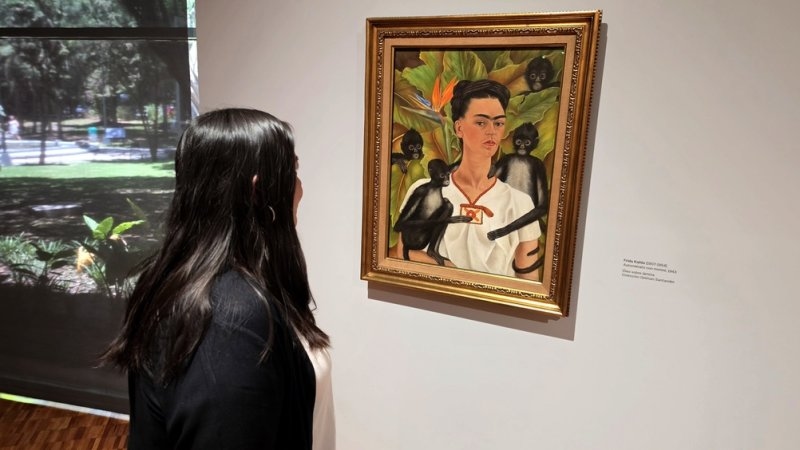
Kahlo is probably the most widely recognized female painter in today's popular imagination. She turned her own pain, identity, and heritage into vivid self-portraits, many of them painted from bed after a serious accident left her with chronic pain, using a mirror to make herself her own most honest subject.
Still working today, Kusama is one of the most popular living artists anywhere in the world. Her polka dots and mirrored Infinity Rooms turn a lifetime of hallucinations into immersive, joyful environments that draw crowds wherever they show up.
Talent alone doesn't explain how these women artists succeeded. Persistence does. Anguissola turned a restriction into a specialty. Morisot took the narrow domestic world she was allowed into and made it extraordinary. Af Klint painted for an audience she knew she'd never meet.
Each of them worked inside real limits and still made work that outlasted those limits by centuries. That's not just an art history footnote. It's a reminder that constraints don't have to be the end of a creative story.
Museums are now actively trying to correct collections that excluded women from art for generations. Exhibitions built entirely around female artists are more common than they used to be, and previously overlooked names keep turning up as archives get a second look.
Must Try: Art Storytelling Through Visual Stories and Human Emotion
Frida Kahlo is probably the most globally recognized name today, largely because of her self-portraits. Historically, Artemisia Gentileschi, Mary Cassatt, and Georgia O'Keeffe also come up often as some of the most influential famous painters.
It came down to access, not talent. Women were kept out of academies, denied figure-drawing instruction, and shut out of the exhibitions and patronage networks that built careers. The ones who succeeded usually had unusual family support or a royal connection.
Sofonisba Anguissola, born around 1532, is among the earliest women artists whose career and surviving work are well documented. She achieved international fame and a spot in the Spanish royal court.
Yes. Yayoi Kusama remains one of the most popular living artists in the world, and plenty of contemporary female artists are building major careers in painting and installation art.
Berthe Morisot helped found Impressionism from the inside, not as an outsider looking in. Others, like Hilma af Klint, were quietly pioneering techniques, abstraction, in her case, years before those ideas became widely recognized trends in art history.
This content was created by AI