

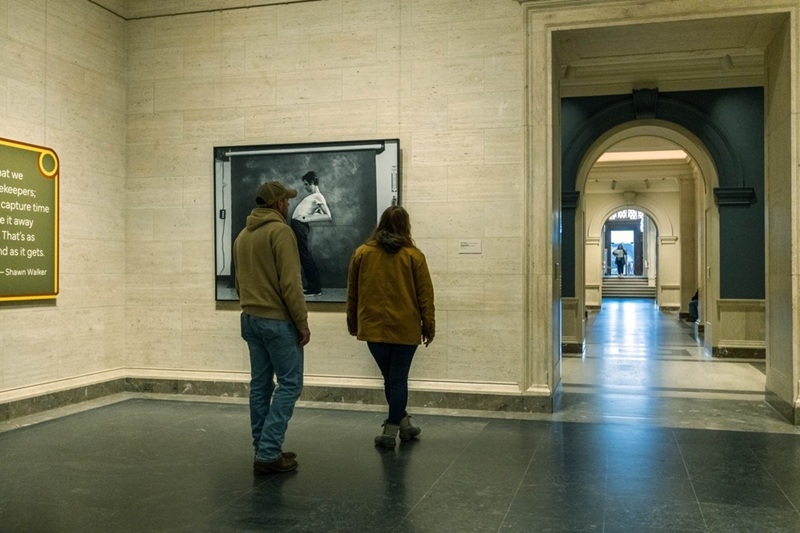
Walk into a museum today and the walls do not always tell the same old story. Yes, the famous names are still there. Picasso still gets attention. Warhol still pulls a crowd. Impressionism still fills rooms with people quietly leaning toward the labels. But something else is happening too. Curators are going back into storage rooms, private archives, old catalogs, regional collections, and half-remembered art circles to ask a better question: who got left out?
That is why forgotten art movements are suddenly feeling relevant again. These are not always movements that disappeared because they lacked talent. Many were overlooked because of race, gender, geography, language, politics, or simply because the art world was too narrow at the time.
Across America, museums are building shows around overlooked histories, under-discussed artists, and movements that once sat at the edge of the mainstream. Recent and upcoming museum coverage has highlighted exhibitions tied to Symbolism, Nigerian modernism, photography surveys, and other reframed art histories, showing how broad this shift has become.
The older museum model often presented art history like a straight road. One movement led neatly to the next. Renaissance, Baroque, Impressionism, Cubism, Abstract Expressionism, Pop Art. Clean, tidy, easy to teach. Also, honestly, incomplete.
Real art history is messier. Artists were experimenting everywhere. Some worked in small cities. Some worked outside major institutions. Some were women whose work was praised privately but ignored publicly. Some belonged to Black, Indigenous, immigrant, queer, or working-class communities that did not receive the same gallery access.
This is where avant garde art history becomes more interesting. The avant garde was never only one Paris studio or one New York loft. It included artists testing form, material, identity, performance, sound, spirituality, craft, design, and politics in places that museums are only now beginning to study with proper care.
Archives can feel official, but they are shaped by choices. What gets saved? What gets purchased? What gets written about? What gets photographed? What gets lost? When museums revisit neglected material, they are not only finding forgotten objects. They are also questioning the old system that decided what mattered.
Many modern museum exhibits now feel less like victory laps for famous names and more like conversations. Instead of simply showing “greatest hits,” museums are pairing well-known artists with lesser-known peers. They are showing sketches, letters, posters, performance records, textiles, photographs, and community-made objects alongside paintings and sculptures.
That matters because some of the most important experimental art styles did not always fit neatly into traditional museum categories. A movement might have lived through performance, handmade books, street posters, mail art, ceramics, protest banners, or underground magazines. If museums only collect framed canvases, entire creative worlds disappear.
Current museum programming also shows a strong interest in reframing national and cultural histories, especially as American institutions revisit how art reflects identity, memory, and public life.
Pattern and Decoration, often called P&D, challenged the idea that decoration was somehow less serious than fine art. In the 1970s and 1980s, artists used ornament, textiles, tiles, wallpaper-like surfaces, and global design references to question old hierarchies.
For years, decorative work was often dismissed as too pretty, too domestic, or too close to craft. That dismissal says a lot about gender and class bias in the art world. Today, museums are looking at P&D with fresh eyes because it connects beautifully with design history, feminism, global exchange, and material culture.
It feels especially relevant now because younger artists are also rejecting the idea that beauty must be shallow.
AfriCOBRA, short for African Commune of Bad Relevant Artists, emerged in Chicago in the late 1960s. The group created bold, rhythmic, politically aware art rooted in Black identity, community pride, and collective imagination.
Its work often used bright color, strong figures, text, pattern, and direct visual energy. It was not trying to fit politely into white gallery expectations. It had its own language.
As museums reconsider hidden art movements, AfriCOBRA deserves serious attention because it shows how art can be community-based, political, joyful, and visually powerful at the same time.
AfriCOBRA connects strongly with current conversations about representation, public art, Black cultural history, and collective creativity. It also reminds viewers that modernism was not only happening in elite coastal spaces.
Spiritual abstraction is not one single movement, but it includes artists who used abstraction to explore mysticism, faith, energy, ritual, and unseen forces. For a long time, this side of abstraction was treated as less serious than formal theory.
Now, that is changing. Museums are more open to the idea that abstraction was not only about shape and color. It could also be about inner life, meditation, belief, and alternative knowledge systems.
This revival fits the broader contemporary art revival of artists once pushed aside because their ideas were considered too mystical, too feminine, or too hard to classify.
Mail art was playful, cheap, rebellious, and deeply social. Artists sent drawings, collages, stamps, photocopies, poems, and strange little objects through the postal system. It was art as communication, not art as luxury product.
For museums, mail art is fascinating because it predicted so much of today’s network culture. It was slow social media before social media existed. It connected artists across borders without needing major galleries.
These kinds of experimental art styles are now easier for audiences to appreciate because people understand networks, remix culture, and creative exchange much more naturally.
You May Also Like: Digital Art Trends 2026 Shaping the Future of Creativity
California assemblage brought together found objects, scrap materials, everyday items, and social commentary. It had humor, roughness, spirituality, politics, and urban texture. It also gave space to artists outside the East Coast art market.
This movement matters because it questions what art can be made from. Not marble. Not oil paint. Not expensive materials. Just the leftovers of daily life, turned into something sharp and strange.
For museums trying to build more layered stories, assemblage offers a strong way to discuss race, labor, consumer culture, and city life.
Feminist performance art has not exactly been forgotten, but it was often under-collected because performance is hard to preserve. The art happened through bodies, actions, photographs, notes, video, and memory.
Today, museums are rebuilding those histories through documentation, restaging, oral histories, and archival research. This has changed how viewers understand the 1960s, 1970s, and beyond.
In the wider story of avant garde art history, feminist performance shows that radical art was not only about new forms. It was also about who had the right to speak, appear, move, and take up space.
Synchromism was an early 20th century movement connecting colour with music. Abstract color compositions allowed the artists to explore rhythm, harmony and visual movement. It was never as famous as Cubism or Futurism, but its ideas were daring at the time.
Now it’s easier to revisit because today’s audiences are used to immersive exhibitions, sound-based installations, and cross-sensory art. The notion that color can behave like music is no longer strange.
As museums rethink forgotten art movements, Synchromism offers a reminder that American abstraction had more experimental roots than many people realize.
For visitors, this shift makes museums more interesting. Instead of seeing the same story repeated, they get surprise. They find artists they did not study in school. They see how one movement influenced another in unexpected ways.
These shows also make museums feel less frozen. When modern museum exhibits bring lesser-known art into public view, they invite visitors to question the label on the wall. Who wrote this history? Who benefited from it? Who was missing?
The best museum visits now feel less like memorizing names and more like discovering connections. A textile might speak to abstraction. A protest poster might speak to design. A performance photo might explain a whole political mood.
Curators are not reviving old movements just to be different. They are doing it because the old canon was too small. Museums have a responsibility to preserve, but also to rethink. When they bring hidden art movements into the spotlight, they make art history more accurate and more human.
There is also a practical reason. Audiences are curious. They want stories with texture. They want to know why certain artists vanished from textbooks. They want exhibitions that feel alive, not recycled.
This is where contemporary art revival becomes more than a trend. It becomes a correction.
Read More: Best Wall Art for Home Decor in 2026 to Transform Your Home
The return of overlooked art is not about replacing famous movements. It is about widening the room. Cubism, Surrealism, Pop Art, and Abstract Expressionism still matter. But they are not the whole story.
The renewed interest in forgotten art movements shows that museums are becoming more willing to admit that art history has gaps. That honesty is a good thing. It gives audiences richer exhibits, gives artists their overdue recognition, and gives the past a chance to speak in a new voice.
For anyone interested in avant garde art history, experimental art styles, modern museum exhibits, hidden art movements, and contemporary art revival, this is an exciting time to visit museums. The walls are changing, and so is the story they tell.
Some art movements were forgotten because they didn’t fit into the taste of powerful collectors, critics, museums or universities at the time. Others were connected to marginal artists who had less access to galleries and publishing. There are fewer records of work that was difficult to preserve at times, especially performance, posters, mail art, textiles, or temporary installations.
Museums often uncover lost work through archives, family collections, university research, regional museums, old exhibition catalogs, artist letters, photographs and oral histories. Curators may also engage with scholars, estates, community groups and living artists with memories of those networks. Attribution, context, condition, and historical importance all require careful study, and this can be a process that takes years.
Yes, many contemporary artists borrow from overlooked movements without always calling them by name. Pattern, craft, performance, political posters, spiritual abstraction, and found-object sculpture all appear in current art practices. These older movements give younger artists permission to work outside strict categories and show that serious art can be personal, decorative, communal, political, or deeply experimental.
This content was created by AI