

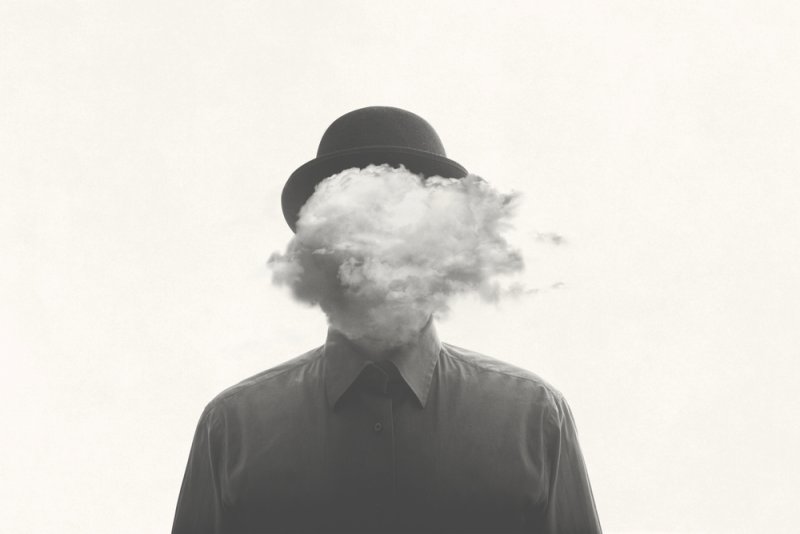
While no single artistic movement significantly objected to the established nature of the world, Surrealism, which originated in the early 20th century, did. The movement pushed for artists to roam the far and fantastical reaches of the imagination rather than endless observation, ultimately becoming a prominent influence on many forms of art, design, photography, and film, as well as the popular culture world as we know it today.
Surrealism changed the art world by allowing the artists and writers to experiment with the subconscious. Surrealism was an artistic and literary movement initiated in the early 1920s. This movement was rooted in a time of social and cultural upheaval, which led to artists finding new ways of moving away from rigid rules of art. Art historians have described Surrealism as one of the most influential movements in modern art, affecting several forms, including painting and sculpture, cinema, and literature.
Instead of representing things as they are in life, Surrealist artists used themes from dreams, existing symbols, and their own psyches. Inventive juxtapositions of familiar objects, relative warps, and imaginative environments were all commonly woven into Surrealist creations. We will first delve into how Surrealism came about, what is surrealist art, analyze what factors identify Surrealist art, take a look at important contributors and their individual pieces, and see how Surrealism has advanced art as a whole in this informative article.
The term on which our argument is built is surrealism. Because of the word's context, people have a general understanding of it even before describing what it is. It is, in essence, an art and cultural movement that aims to unleash the creative potential of the unconscious mind.
It was officially launched in 1924 when a French author, André Breton, published the Surrealist Manifesto. Surrealists, drawing on Freud's research in psychology, held the belief that 'the underside draws from the solving of mysteries of dreams and unconscious thoughts.'
Surrealist artists, however, did not try to make art based on a realistic view of the world. As a group they valued "horror vacui," or "fear of empty space." They focused on the creativity of the artist and jumped into the imagination of the viewer.
Today when people ask, "What is Surrealist Art?" (a question that still gets asked today), the timeless answer is to describe art that merges fantastical images, novel visuals, and consciousness-expanding ideas.
Read More: Deep Impact of Symbolism on Modern Art: Themes and Artists
Surrealism is deeply rooted in the world after several years of WWI.
Numerous artists became disenchanted with existing institutions and felt the urge to discover new methods of perceiving the world; pioneer actors of movements such as Dadaism broke established norms of an art creating opportunities for the Spanish-born movement of Surrealism's deeper level of the mind and imagination.
Within a few short years, Surrealism swept across the continent, drawing painters, writers, poets, photographers, and filmmakers to its fold, all influenced by a common intent to pierce the veil of the human mind.
It wasn't merely an artistic movement. The movement was also underpinned by the philosophical conviction that through creative expression, the mind could be free from the chains of society and rational thinking.
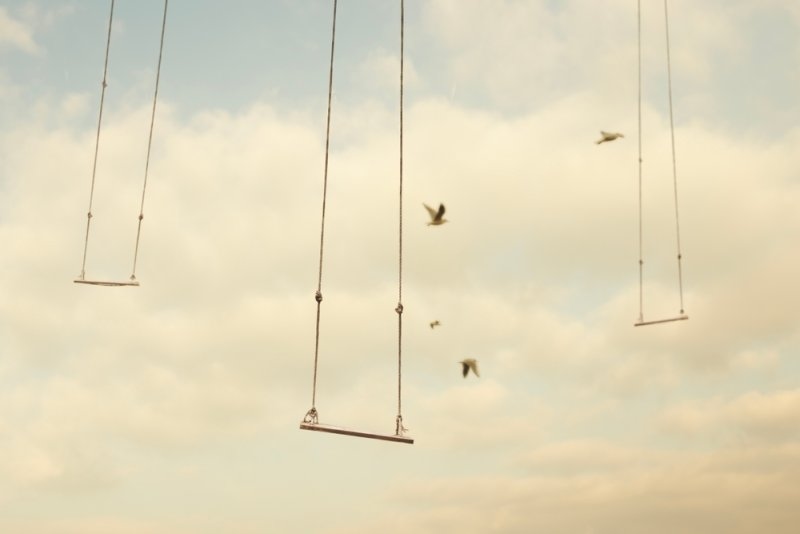
The fact that we are familiar with what is characteristic of Surrealism here has to be an advantage to their reputation and can help us understand where their attraction lies.
One of the most distinctive features of Dream-Inspired Art is how accurately it reproduces the bizarre behavior of dreams.
Objects can be in strange places, proportions may be distorted, and the content of scenes may become strangely meaningful. These surreal effects prompt the audience to automatically view the works in the light of their feeling about them.
Surrealist artists would frequently combine unrelated objects to create unexpected visual associations.
Three things that might appear impossible are a clock defined by 'melting,' a rock floating suspended in space by itself, and an 'everyman' figure merged together with nature.
Symbols have an important place in Surrealist paintings.
The use of personal and universal imagery helped artists to visually represent their subconscious thoughts and feelings, memories, fears, and desires. This is still one of the movement's most peculiar features.
Surrealists distorted perspective, size, and shape instead of depicting the real world in a truthful manner.
These distortions generate visual tension that can be thought-provoking and promote fresh thinking.
Many artists were responsible for making Surrealism one of the world's most significant movements in the Modern Art History.
On no account of discussing Surrealism would one want to exclude Salvador Dal.
Brilliant as he was with his imagination and his craftsmanship, the artist known as Dal created some of the most famous images in the history of art. He is famous for weaving objects, huge landscapes, and otherworldly symbols:
Numerous Salvador Dalí Paintings, one of them being The Persistence of Memory, help perpetuate the modern definition of Surrealism.
As an artist, he reasoned about attempts on the body of the Surrealist movement as a whole through puzzles and images.
Many of his paintings defy the notion of reality, language, and perception. The Son of Man is still one of the most recognizable images in contemporary art.
Max Ernst is known to be experimental with different mediums and outlandish images. His work contributed to the broadening of the potential for creative Surrealist expression to extend into painting, collage, and sculpture.
Essential Reads: Forgotten Art Movements Reshaping Museum Exhibits
Surrealism pushed artists to change the way we think about art in the first place.
Prior to the revolution, a lot of schools of art relied heavily on technical skill, realistic depictions, or following canonical ideas. The surrealists overthrow the rules by applying spontaneity, intuition, and personal imagery.
With this change, definitions of art broadened and new opportunities for experimentation arose.
The only rule was that consciousness had to be eliminated in representation. Artists now felt free to depict their inner lives, feelings, dreams, and psychological processes.
These freedoms are retained to this day and are felt by modern artists, designers, architects, and others from diverse fields.
Surrealism's repercussions go well beyond the museum/gallery model;
One can think of filmmakers like Lynch, who bring Surrealist ideas into the cinema, or designers today who use dream images to create unforgettable visions.
Even today's marketing endeavors to use surrealist ideas and depth concepts to get people's attention and make them feel something.
After almost 100 years of its development, Surrealism is still amazingly pertinent.
Artists are still finding new ways to explore the world of imagination, self, and subconscious in a Zeitgeist that has been politically driven by the digital, the artificially intelligent, and the virtual.
This movement serves to remind us that any great work of fiction is only limited in its imagination by the writer's logic. Truly one would be hard-pressed to come up with some of the best ideas put forth when we let our imagination challenge reality
For a modern observer, Surrealism remains both a chronologically rooted movement and an eternally fresh influence.
The movement of Surrealism had a huge impact on how artists think about the creative process and expression. This movement opened new doors when it came to how images could be created by taking on ideas such as dreams, symbolism, and the subconscious mind. We looked into what is Surrealism, how it came about, what makes it up, which people were the key Surrealists, and the movement’s role in the present day.
Even now, the movement still leaves its mark on present-day creative fields. Leading the way to uncover them is ArtOrigin (a.k.a. Us), which highlights artistic ingenuity and the life-changing effects of imagination by launching a global hub that helps art lovers find the stories, movements, and thoughts that still inform people to create.
Indeed, many modern digital artists continue to be inspired by Surrealist ideals. In contemporary society artists can be given the means to juxtapose images, distort images, and imagine dream worlds, which stays true to the founders' concept. The modern tools available in contemporary society help to provide new ways of looking into the genre of Surrealism, as well as exposing the world to these surreal methods with future generations.
Yes, it does influence literature in several significant ways, particularly within poetry and experimental writing. Writers who were influenced by Surrealism experimented with automatic writing, bizarre stories, and allegorical language in order to tap into their subconscious. These innovations in the genre of literature played an active role in popularizing the ideas of Surrealism in the Cultural evolution of the twentieth century.
The best strategy may be to look rather than to explain or try to understand at first. Surrealist works are more about one's own emotional experience and interpretation rather than providing an obvious or readily available interpretation of the artwork itself. It can also help to engage with and appreciate the uniqueness of Surrealism, to learn about the main artists and the context surrounding their creation, and even to consider the interpretation or symbolization behind each work.
This content was created by AI