


Art doesn’t always play by the rules or stick to copying reality. Sometimes it slows you down and asks you to look again—to catch the ordinary from a brand-new angle. That’s more or less what happened when Cubism arrived in the early 1900s.
If you’ve ever looked at a Cubist painting, you know the feeling: faces split into strange pieces, objects all jumbled, a guitar dissolving into layers of itself. Weird? Yeah. But there’s something magnetic about it.
Let’s break down what actually makes Cubism tick—the major shapes, why artists started down this path, and how you can spot a Cubist work from across the room.
First, why does Cubism matter? Why did artists even want to chop reality into pieces?
It all started in France at the beginning of the 20th century. Back then, most painters tried to capture the world just as it looked. The goal was realism—get the light right, make that apple practically pop off the canvas.
Then a bunch of artists stopped asking, “How can I make this look real?” and started asking a new question: “What if I show you several sides of something, all at once?” That was the spark for Cubism.
Old-school painters loved perspective, structure, and realism. Cubists took that and flipped it over. Instead of showing a person or an object from just one angle, they painted multiple perspectives at once. Picture seeing someone from the front, the side, and above—all mashed into a single image. Sounds wild, right? That’s the experiment Cubism turned into a movement.
The results? Bold, brainy, and sometimes a little unsettling.
Cubism’s story centers around two main figures: Pablo Picasso and Georges Braque. The “Les Demoiselles d'Avignon,” Picasso's startling work with its sharp edges and new structure, emerged out of the blue. People remember that moment as a Cubist turning point.
Meanwhile, Braque was busy simplifying objects and using geometry to reshape the world on canvas. The two bounced ideas back and forth, rewriting art’s playbook in the process.
Don't Miss: From Cave Walls to Canvas: Evolution of Art Has Through the Ages
If you want to spot a Cubist painting, look for the shapes. Cubism’s language is geometric—no mistaking it.
Cubism runs on simplified shapes. Artists ditch soft, smooth details for cubes, triangles, rectangles, circles, and crisp angles.
Take a violin—suddenly it’s a cluster of intersecting blocks. A face melts into hard, jagged planes. The art looks shattered, but you can tell it’s deliberate, almost architectural.
It’s like pulling a puzzle apart and then building a new puzzle from the pieces.
One big Cubist trademark: seeing a thing from more than one angle at a time. A typical artist paints a coffee mug from the usual side view. But in Cubism, you get the handle, the rim, the side—all at once. It’s jarring until you start to notice how all the bits fit and how your eye travels through the picture.
And honestly? That little bit of confusion is the hook.
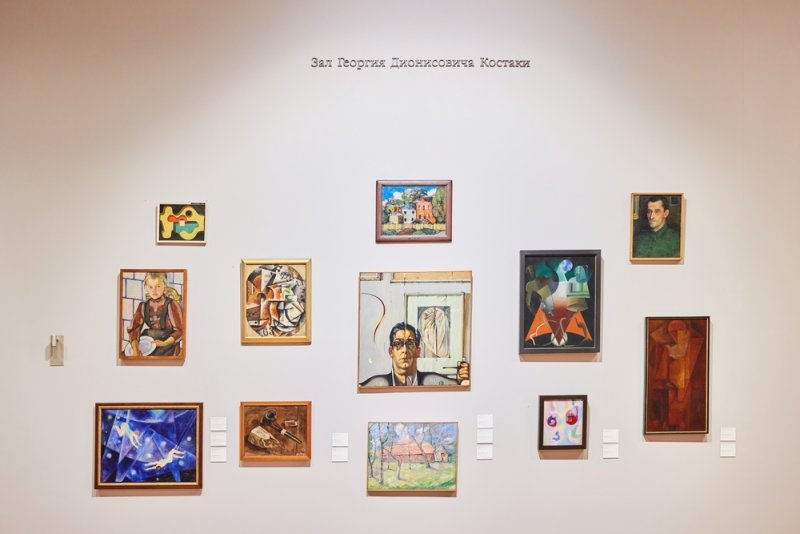
Not every Cubist piece looks the same. As the movement grew, two big styles took shape: Analytical and Synthetic Cubism.
This came first. Artists broke down subjects into small, interlocking shapes—geometric and often in muted browns and grays. They weren’t after beauty, but structure. It was like taking something apart to understand how it works.
In these paintings, you get violins, bottles, and a jumble of everyday stuff. Stare at one long enough, and you might think, “What am I even seeing?” That’s the point—it forces you to stick with it.
Analytical Cubism is a puzzle for your eyes.
Then things loosened up. Synthetic Cubism brought brighter colors, bigger shapes, and wild materials—bits of newspaper, wallpaper, all glued into the mix. The work felt experimental and playful.
The objects became easier to recognize, and the whole process started to feel more like constructing than deconstructing. Suddenly, Cubism wasn’t just for art insiders; it made sense to everyone who took a closer look.
You really cannot discuss Cubism without mentioning Picasso.
His influence was enormous.
You can’t talk about Cubism without mentioning Picasso. He didn’t just dabble—he led the charge.
Picasso kept pushing boundaries. Some years, his paintings were sharp and stripped down. Other times, they exploded with color or spiraled into pure symbol. He was always poking at the edges, and that drive is why Cubism ended up so powerful.
Look at “Les Demoiselles d’Avignon,” “Girl Before a Mirror,” or “Three Musicians.” Each one attacks the idea of structure differently, but you always feel that Cubist energy.
Did Cubism stay tucked away in old museums? Not a chance. It exploded out into the world, opening doors for all kinds of modern American art.
Before Cubism, Western art was obsessed with copying the world as exactly as possible. Cubism made artists realize: you can interpret reality instead of just mirroring it.
That shift opened up abstract art for good. Movements like Futurism and Abstract Expressionism, even today’s graphic design, owe a debt to Cubist thinking.
The main focus switched to concept and structure. Now it was not so much about getting everything right as about investigating how we see.
Also Read: Cultural Heritage in Art: Celebrating Diversity & Creativity
Cubism revolutionized art by turning it upside down. It rejected the notion of copying reality and sought greater basic meaning in shapes and angles. Picasso and his gang constructed something bold, and their thoughts set the course for all the creative adventures that are to come.
When you see a painting that looks like a jigsaw puzzle—geometry and off-axis perspectives—it's likely Cubism's influence.
Search for pictures that appear to be divided into geometric forms and that have two or more points of view. Faces or objects will appear disarranged, not so much detail, but structure and perspective.
Cubist painters felt that one perspective was not sufficient for depicting reality. They wanted you to experience the subject more fully and see it from more than one angle; a whole new way to tell a visual story.
It may seem like a lot of mumbo-jumbo at first. With a little time, patterns and shapes are discovered more clearly over time. It's better appreciated when viewed slowly.
Not always. The initial Cubist pieces tended to be earthy and abstract in coloration, while later compositions frequently involved striking colors and inventive composition. This is largely dependent on the period and style of the artist.
This content was created by AI