

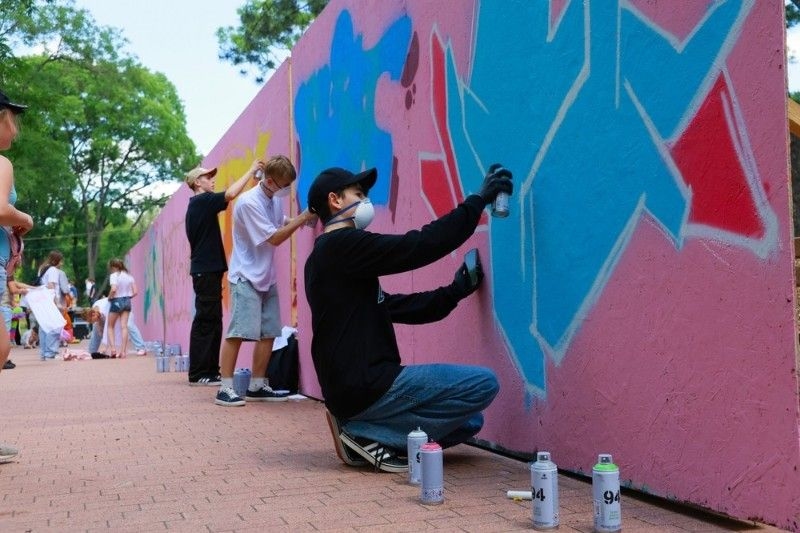
The street art movement refers to creative artwork placed on public surfaces such as city walls, bridges, streets, and buildings. It started as a form of expression created directly in urban spaces instead of traditional art galleries.
This blog explains how it began and how the history of street art slowly shaped modern city creativity. It will also cover how the graffiti art evolution changed the style of public art.
The street art movement started slowly without making a noise in the busy cities. Artists started sharing their thoughts in public spaces by crafting their art on the walls and empty buildings.
In the early days, many artists worked during late hours. Spray paint, markers, and simple stencils were the main tools used to create their work. The goal was not always fame. Sometimes it was just about leaving a mark in the city and letting people know someone was there.
Authorities and property owners viewed these works as vandalism at first. Walls covered in paint were seen as damaged rather than art. Artists often stayed anonymous and worked quickly because of this issue.
However, people started noticing this art and did not just refer to it as random scribbles. This is because some murals were detailed and colorful, which clearly showed the skill of the artist.
This shift was essential for the growth of street art. City walls around the world are adorned with displays of creative works that attract visitors, photographers, and art lovers.
You can refer to the following list to understand the history of street art:
Walls have been the carriers of messages for centuries, etched on the walls of the city by hands that long to express themselves. In ancient cities, messages, sketches, and signs conveyed stories of life, humor, and politics in the city.
In the 20th century, the city's neighborhoods expanded the canvas. Young artists took up the brush to express identity, anger, and hope, converting the trains, walls, and spaces of the city into galleries. The reach of the art was amplified, reaching far and wide.
Large murals began to emerge in the city’s neighborhoods that longed to tell stories of life through art. Scenes of families, cultures, and experiences adorned the walls of the city, giving the people of the city a sense of belonging to the space.
The following list will help you understand how the graffiti art evolution impacted street art:
Early graffiti artists often wrote their names or nicknames in bold lettering. Each artist tried to create a unique style that could be recognized easily. These letter designs became more creative over time.
As the graffiti art evolution continued, artists learned new spray techniques. They experimented with color layers, shadows, and outlines. Walls that once held simple words began displaying vibrant pieces that required planning and skill.
Later graffiti works began including characters, objects, and full scenes. Artists used these visuals to express humor, social ideas, or local culture. This change allowed graffiti to grow beyond simple tagging and move toward creative storytelling.
You must know the following things about the urban art culture:
The streets become a gallery for everyone, and they get to see art in motion as they go about their daily lives. This has helped urban art culture flourish almost on its own.
Public art can share social messages, talk about cultural identity, or promote community pride. This type of art can create awareness or challenge people to look at things differently.
Street artists work together on large-scale murals or projects, especially if it is a community project. When they work together, they get to see a mix of different artists' styles and ideas.
The following list will help you understand the reasons people love watching street art in museums:
The street art disappears as buildings are remodeled or a fresh coat of paint is applied to the wall. Museums step in to protect these pieces so that they can continue to be studied and appreciated.
The pieces, when kept indoors, also invite people to study techniques more closely. When in a museum setting, people can study colors, stencils, and spray techniques in a new light.
Museums create a link between street artists and people who normally have a preference for paintings or sculptures.
The 3 most famous street artists in history include individuals who helped shape public perception of street art and brought global attention to the art form.
Jean-Michel Basquiat began by writing short messages and drawings on city streets. His early works explored culture, identity, and social themes.
Basquiat later became a major figure connected to the history of famous street artists, influencing both street art and contemporary art.
Keith Haring created bold figures and clear visual symbols that were easy for the public to understand. His drawings appeared in subway stations and public spaces where thousands of people could see them.
Shepard Fairey became known for using posters and stencil art to spread political messages. His work demonstrated how street art could influence public opinion and visual culture.
The street art movement shows how creativity can grow in unexpected places. What once appeared on city walls as simple markings slowly gained respect and recognition. Today, public art continues shaping cities and communities while proving that powerful artistic expression does not always begin inside traditional galleries.
The street art movement refers to artworks created in public spaces such as walls, streets, and buildings.
Public perception changed when people recognized the creativity and messages behind the artworks. Documentation, exhibitions, and research also helped increase cultural recognition.
Graffiti is one form of street art that focuses mainly on lettering and tags. Street art includes a lot of different styles, such as murals, stencils, and installations.
This content was created by AI