

For years, the medium of art has been sight. The art of sound challenges this, showing that art does not need to be seen to be experienced; it can be heard, felt, and witnessed. History notes show that the practices of sound art have evolved from theory to mainstream contemporary art practice since the early 20th century. Instead of relying on color, shape, or form to deliver its message, sound art uses sound waves, silence, field recordings, and audio experiences to convey its message. From installations in galleries to works designed for exploration in public spaces, artists are creating experiences that stimulate audiences in entirely new ways.
As technology plays an increasingly vital role in the creative industries, sound-based works have become an integral part of art galleries, museums, and public spaces. In this article, we examine the history of sound art, its influence on contemporary practice, notable works, and why this genre has become integral to the expansion of artistic possibilities.
At its essence, sound art is an interdisciplinary medium that uses sound as its primary artistic component. It sits at the edge of visual art, media art, and experimental music, resulting in experiences that tend to defy conventional notions of art.
Instead of prompting audiences to "look" at an artwork, sound art encourages participants to "listen" and "move" and to actively engage with their immediate environment, transforming them from mere observers into active participants.
Many artists use sounds from natural environments, spoken-word recordings, digital equipment, and acoustic experiments to create pieces that conjure memory, emotion, and awareness.
The first known exploration of sound art dates back to the early 1900s, when artists began experimenting with sound.
Italian artist and composer Luigi Russolo can be considered one of the earliest proponents of a sound-based art form. It was in 1913 that the term 'The Art of Noises' first appeared, a movement of which he was the chief theorist and advocate for the use of industrial sounds in art. He designed several musical instruments that produced a greater range of sound than any existing orchestral instruments.
This paved the way for further development in the world of experimental music and sound art.
The art form would later be revolutionized and elevated by the composer John Cage. The 1952 piece "4'33" was a significant milestone that demanded attention to the existing sound rather than to a composition performed, encouraging listeners to actively attend to the ambient sounds of their environment.
Perhaps one of the most engaging aspects of sound art is that it has enabled us to break down the boundaries that define traditional artistic practice.
Unlike a painting or sculpture that remains relatively fixed in space, sound art is ephemeral and nomadic. It can envelop the listener and even evolve depending on location, creating a fully immersive rather than static viewing experience.
While much traditional art focuses on visual representations, sound art aims to enhance the audience's listening, breaking down what is and isn't art for modern appreciation. As such, many works housed in contemporary museums and galleries focus primarily on sound rather than supporting it with visual media. (artdex.com)
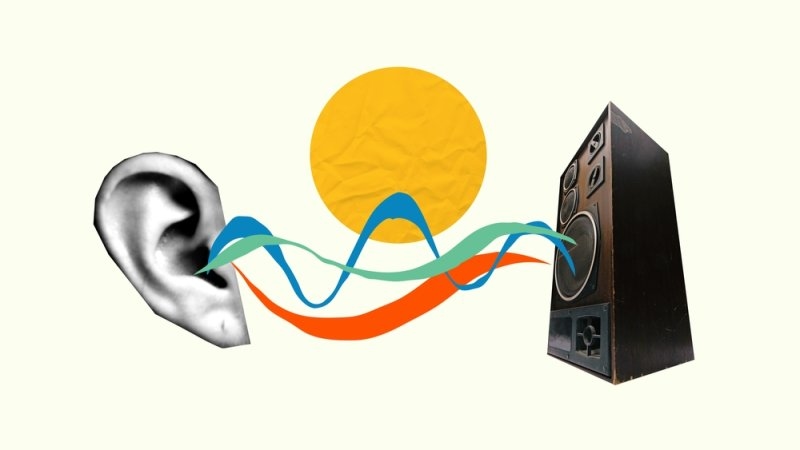
One of the primary developments within sound art that has seen recent uptake is sound installation.
This form of artwork refers to pieces that are context-specific; they are created to interact with a specific place and to utilize speakers, sound installations, architecture, and ambient recordings to make the participant's journey through the installation engaging. These artworks can create new perspectives on established spaces.
For instance, the transformation of familiar urban spaces can be induced solely by altering ambient noise: many of today's exhibitions integrate sound installations alongside sculpture, digital works, and interactive art.
Try This: Learn The Forms Digital Art & Innovative Artistic Practices
The rapid acceleration of technology has had a profoundly positive impact on the progression of sound art.
The use of artificial intelligence, digital audio manipulation, and spatial audio technology enables artists to create highly interactive, responsive works.
One of the most interesting spheres of sound-based practice is interactive art, where listeners actively participate in shaping the artwork through movement, touch, and physical presence. This ensures that every individual's experience with the artwork is unique and tailored to them. As such, sound art has increasingly been viewed as a fully immersive and individualistic artistic practice.
The use of algorithmic composition, data visualization, and other contemporary techniques allows artists to engage with relationships between sound, space, time, and human perception in new and innovative ways. (artdex.com)
Several sound artists, in recent decades, have been fundamental in changing how we perceive and experience their chosen medium: Max Neuhaus used sonic interventions to transform public spaces; Bill Fontana used environmental recordings to alter people's perceptions of the urban environment; Ryoji Ikeda looked at the relationship between sound, data, and visuals; while Janet Cardiff created immersive works that blurred the boundaries of fiction and reality. (artdex.com)
These artists demonstrate that sonic art can effectively communicate complex ideas and emotional connections.
In a world increasingly dominated by technology and digital imagery, audiences are seeking more personal and engaging experiences. Sound art has thus addressed the gap by prompting greater active listening, awareness, and sensory stimulation to both deepen our awareness of our environment and further develop artistic potential. By the very nature of the growing interest in the interdisciplinarity of our museums, galleries, and public arts institutions, sound art is, and indeed, has already had a significant place within the contemporary art world.
Must Try: How Social Media is Shaping Modern Artistic Trends?
In sound art, the journey from experimental sonic processes to avant-garde artwork has advanced rapidly. Fusing audio art, experimental music, interactive art, and sound installation, it has consistently pioneered further artistic boundaries and challenged how we perceive and interact with art. As is evident from its first experiments at the dawn of the twentieth century through to modern digital installations, sound art clearly asserts that our creative powers can exceed visual considerations.
Through the continued innovation of artistic practices, the rise of platforms such as ArtOrigin enables artists and audiences to access, understand, and discuss new creative movements.
While music consists of composition, intended to be listened to over a period of time, sound art can use sound in artistic ways in regard to its environment, interaction, and physical and sensory abilities, instead of a reliance on rhythm, melody, or performance as the main components of a piece of art. A lot of sound art is designed for use in gallery installations or for the wider community rather than for presentation as part of a live concert performance.
No, though its use has greatly enhanced sound art in recent years. Artists have previously used natural sounds, mechanical sound-making devices, acoustic instruments, and environmental sounds to create a sound-based art form. However, technology can expand the artistic possibilities.
Sound art can now be viewed in virtually all contemporary art galleries, public installation sites, and even museums. Many artists are also experimenting with new platforms, and some works can even be accessed remotely online or virtually. The popularity of large, interactive exhibitions now means sound art is a fixture within contemporary art culture.
This content was created by AI